Free Chef Resume Template & Examples
A chef resume has to tell a head chef or hotel recruiter what kind of kitchen you can run before they invite you for a trial shift. They look for the cuisine you cook, the covers and brigade size you handled, your section or rank, your food safety record and, for senior chefs, food cost and team results. This guide covers the format from commis to executive chef, qualifications and food safety certificates in the US, UK, India and Australia, examples with real kitchen numbers, keywords and common mistakes.
Best resume format for a chef
Use reverse-chronological order, because kitchens hire on progression: commis, demi chef de partie, chef de partie, sous chef, head chef. Commis chefs and line cooks need one page. Sous, head and executive chefs can use two pages when there are openings, menus and teams to show.
A section order that works: a header with your rank and cuisine, a short summary, experience, culinary skills, qualifications and food safety certificates, then education. Under each job, add one scope line first: venue type, seats or rooms, covers, cuisine and brigade size, such as 90-seat brasserie, 220 covers a night, brigade of 12.
ResumeInk's Timeline layout shows a climb through kitchens clearly, and the timeline resume templates page shows it in different colours. Hotels in India and the Gulf often expect a photo in chef's whites, which the Portrait or Sidebar layout handles (see resume templates with a photo); in the US, UK and Australia leave it off. Link to your dishes in a portfolio rather than adding food photos to the page.
What to include in a chef resume
- Scope line for each kitchen: restaurant, hotel, banqueting, catering, cruise or contract catering; seats or rooms; covers; cuisine; brigade size; awards or guide listings.
- Your section and rank: pastry, larder, grill, sauce or tandoor, and when you ran the pass.
- Kitchen management: food cost or gross profit percentage, ordering, stock takes, waste, rotas and labour cost for senior roles.
- Food safety: your certificate level, HACCP plans you wrote or kept, inspection results and allergen control.
- Menu work: menus or dishes you created, seasonal changes, specials, tasting menus and how they sold.
- People: chefs trained, promoted or hired, and how you kept a brigade together.
- Openings and events: new sites, refits, festivals, large banquets and outside catering.
Keep dish lists short. One sentence about a signature dish and a portfolio link say more than a page of menu items.
Chef certifications and credentials by country
No licence is needed to cook professionally, but food safety training is expected everywhere and culinary qualifications help you move up.
- US: many states and counties require a food handler card, and most kitchens need at least one Certified Food Protection Manager, often through ServSafe Manager. The American Culinary Federation (ACF) certifies chefs by level, from Certified Culinarian (CC) and Certified Sous Chef (CSC) to Certified Chef de Cuisine (CCC) and Certified Executive Chef (CEC).
- UK: Level 2 Food Hygiene is the baseline for kitchen staff, Level 3 is common for sous chefs and Level 4 for head chefs who write food safety systems. City and Guilds or NVQ Level 2 and 3 in Professional Cookery, or a commis or chef de partie apprenticeship, show training. Add allergen awareness.
- India: a hotel management degree or a diploma in food production from an IHM or a private institute is the usual route, and FSSAI's FoSTaC training is how kitchens meet the rule for trained food safety supervisors.
- Australia: Certificate III in Commercial Cookery is the trade qualification, Certificate IV in Kitchen Management suits sous and head chefs, and many food businesses need a certified Food Safety Supervisor.
In the Gulf, hotels look for HACCP training, and Dubai kitchens often ask for a Person in Charge (PIC) certificate.
Chef resume summary examples
Name your rank, your cuisine, the size of the kitchen and one result. Three examples:
- Entry level: Commis chef with a Level 3 Diploma in Professional Cookery and 18 months on the larder and pastry sections of a 120-cover gastropub. Holds Level 2 Food Hygiene, works clean and fast through a busy Saturday service, and is ready to step up to chef de partie.
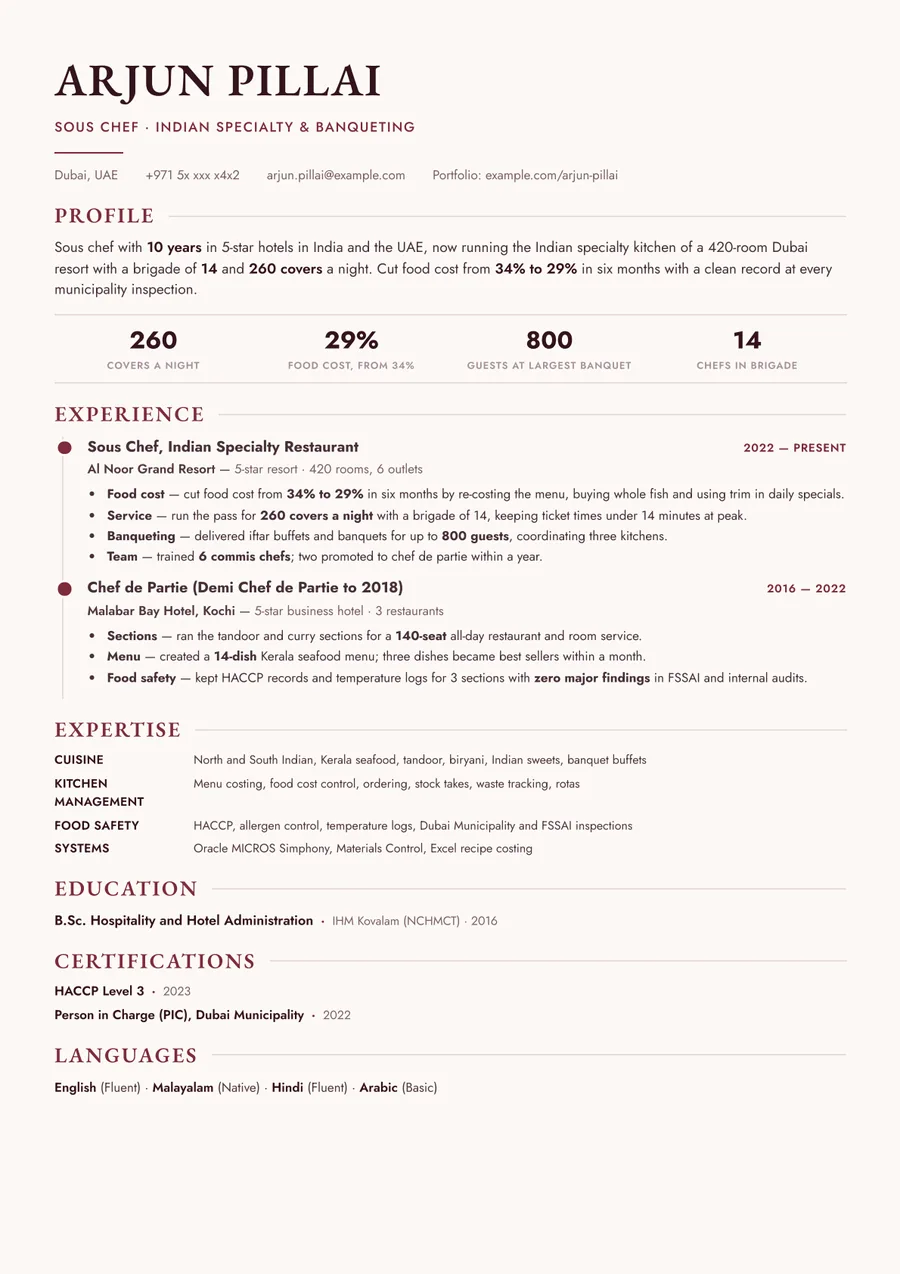
- Mid level: Sous chef in a 5-star Dubai resort, running the Indian specialty kitchen with a brigade of 14 and 260 covers a night. Cut food cost from 34% to 29% in six months and has a clean record across every municipality inspection.
- Senior: Executive chef with 16 years in Australian hotels and restaurant groups, leading 45 chefs across three outlets and banquets for up to 800 guests. Opened two venues, raised kitchen gross profit to 71% and holds a Certificate IV in Kitchen Management.
Starting out? The guide to a resume with no experience shows how to use college placements and kitchen porter shifts.
Chef resume bullet point examples
- Ran the pass for 220 covers a night in a 90-seat brasserie with a brigade of 12, keeping ticket times under 14 minutes at peak.
- Cut food cost from 34% to 29% in six months by re-costing the menu, buying whole fish and using trim in daily specials.
- Reduced food waste by 22%, measured weekly by weight, with prep par levels and a first-in, first-out audit of the cold rooms.
- Kept a 5 food hygiene rating across three inspections and recorded zero allergen incidents in 60,000 covers.
- Created a seasonal menu of 14 dishes; three became the restaurant's best sellers within a month of launch.
- Delivered banquets and iftar buffets for up to 800 guests in a 420-room resort, coordinating three kitchens.
- Opened a second site: hired and trained a brigade of 14, wrote 120 recipe and plating specs and served the first 1,000 covers in week one.
- Trained 6 commis chefs; two were promoted to chef de partie within a year.
Covers, food cost, waste and inspection results are the numbers a head chef or general manager knows how to read.
Skills & ATS keywords for chef resumes
Hotel groups and restaurant chains screen with software, so mirror their terms:
- Roles and sections: commis chef, demi chef de partie, chef de partie, sous chef, head chef, executive chef, line cook, pastry chef, banquet chef, tandoor, larder, grill, sauce.
- Cuisines and techniques: modern European, Indian, Italian, pan-Asian, Middle Eastern, butchery, fish preparation, sauce work, sous vide, fermentation, bread and pastry, plating.
- Kitchen management: menu development, recipe costing, food cost and gross profit, ordering, stock control, waste reduction, rota planning, labour cost, supplier relationships.
- Food safety: HACCP, allergen management, temperature control, cleaning schedules, food safety audits, FSSAI, ServSafe.
- Systems: Oracle MICROS Simphony, Toast, Lightspeed, Apicbase, MarketMan, Fourth, Excel for costing.
- Soft skills: leadership on the pass, calm under pressure, clear communication, teaching, consistency, creativity.
Use the ATS resume checker to see how hiring software reads your draft.
Common chef resume mistakes
- No scale. Sous chef means little without covers, seats and brigade size. Add the scope line to every job.
- Missing food safety certificates. Many employers filter for them. List the level and year.
- Long dish lists. Twenty menu items do not show judgement. Pick one or two signature dishes and link to a portfolio.
- No numbers for senior roles. Head and executive chefs are hired on food cost, gross profit, waste and team retention as much as on cooking.
- Unexplained gaps. Seasonal contracts, ships and festival work are normal in kitchens. Label them as seasonal so the gaps read correctly.
- One resume for hotels and restaurants. Hotels want banqueting, volume and systems; independent restaurants want creativity and hands-on cooking. Adjust the summary and order.
For senior chefs moving into multi-site roles, the operations manager resume guide shows how to present budgets and teams.
Premium, ATS-friendly templates


Build your resume in minutes
Upload your current resume, edit anything, then preview and download it free.
Upload your resumeFrequently asked questions
How do I write a chef resume with no experience?
Lead with your culinary course or apprenticeship, college placements and any kitchen porter or prep work, and list your food hygiene certificate. Offer a trial shift and keep the resume to one page.
What certifications should a chef put on a resume?
Your food safety certificate comes first, such as ServSafe in the US, Level 2 or 3 Food Hygiene in the UK, FSSAI FoSTaC in India or a Food Safety Supervisor certificate in Australia. Then add culinary qualifications such as an NVQ, a Certificate III in Commercial Cookery or an ACF certification.
Should a chef resume include a photo?
In the US, UK, Canada and Australia, leave it off unless asked. Hotels in India, the Gulf and parts of Asia often expect a professional photo in chef's whites.
How do I list kitchen ranks like commis and chef de partie?
Use the rank the kitchen used, then add the section and scope, for example chef de partie, grill, 220 covers a night. If you are applying outside hotels or fine dining, a plain description helps readers who do not know the brigade system.
Should I include a portfolio of my dishes?
Yes, as a link to a simple portfolio or a professional Instagram account with well-lit photos of your own plates. Keep the resume itself text-based so hiring software can read it.